✦ For Parents
Children learn to count and read. They only learn to talk about feelings when someone takes the time for it.
Sometimes a child doesn't even know what's going on inside them. They just notice that something is off. Anger, withdrawal or tears are then often the only path they know. Children who learn early to name their feelings need that detour less often. They get through conflict better, feel safer, and can say what they need. That's why emotional education isn't a side issue. It begins in Kita and school, and its effects reach far beyond childhood.
What your child learns
From feeling to understanding
It's not about finding the right answer. There isn't one.
Anger is rarely the real problem
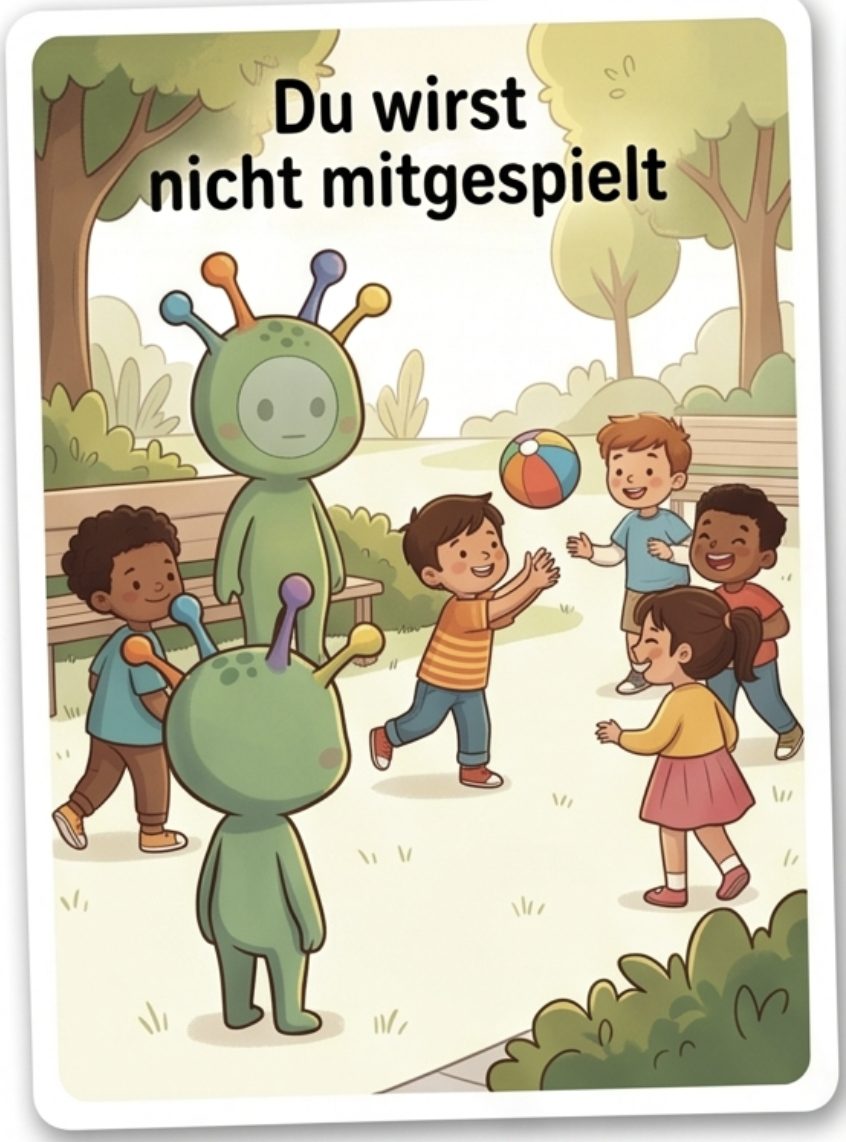
When children can't yet express their feelings well, their inner experience shows up in their behaviour. We see the behaviour right away, the feeling behind it not always. That's why EMORIA wants to shift the perspective. Not just asking: What is this child doing right now? But also: What might they be feeling, and what might they need?
And what does this have to do with me as a parent?
Maybe your child talks at home about Yubuu or a feeling. Maybe not. Both are completely fine. You don't have to replay the game and you don't need any educational training. Often it's enough to listen and ask: “What was that like for you?” What matters is that your child notices: my feelings are allowed to be here. I am heard.
Small prompts for home
Name the feeling: "You seem disappointed right now."
Ask instead of guessing: "Would you like to tell me what happened?"
Don't fix it right away: Sometimes a child first needs understanding, not advice.
Be a role model: When you name your own feelings, your child learns that this is normal.
A good question for your next parent-teacher conversation
"Was there a moment today that really stuck with my child?"
This question often opens up more than "Was everything okay?".

„Sometimes the loveliest conversations begin with a single question: How do you feel today?"
— Yubuu
When a small conversation happens at home, something important has already occurred: a child tells, an adult listens, and both try to understand each other a little better.
Questions? Write to us