✦ For Kindergartens
Discover feelings together — playful, part of everyday life, with no big preparation needed.
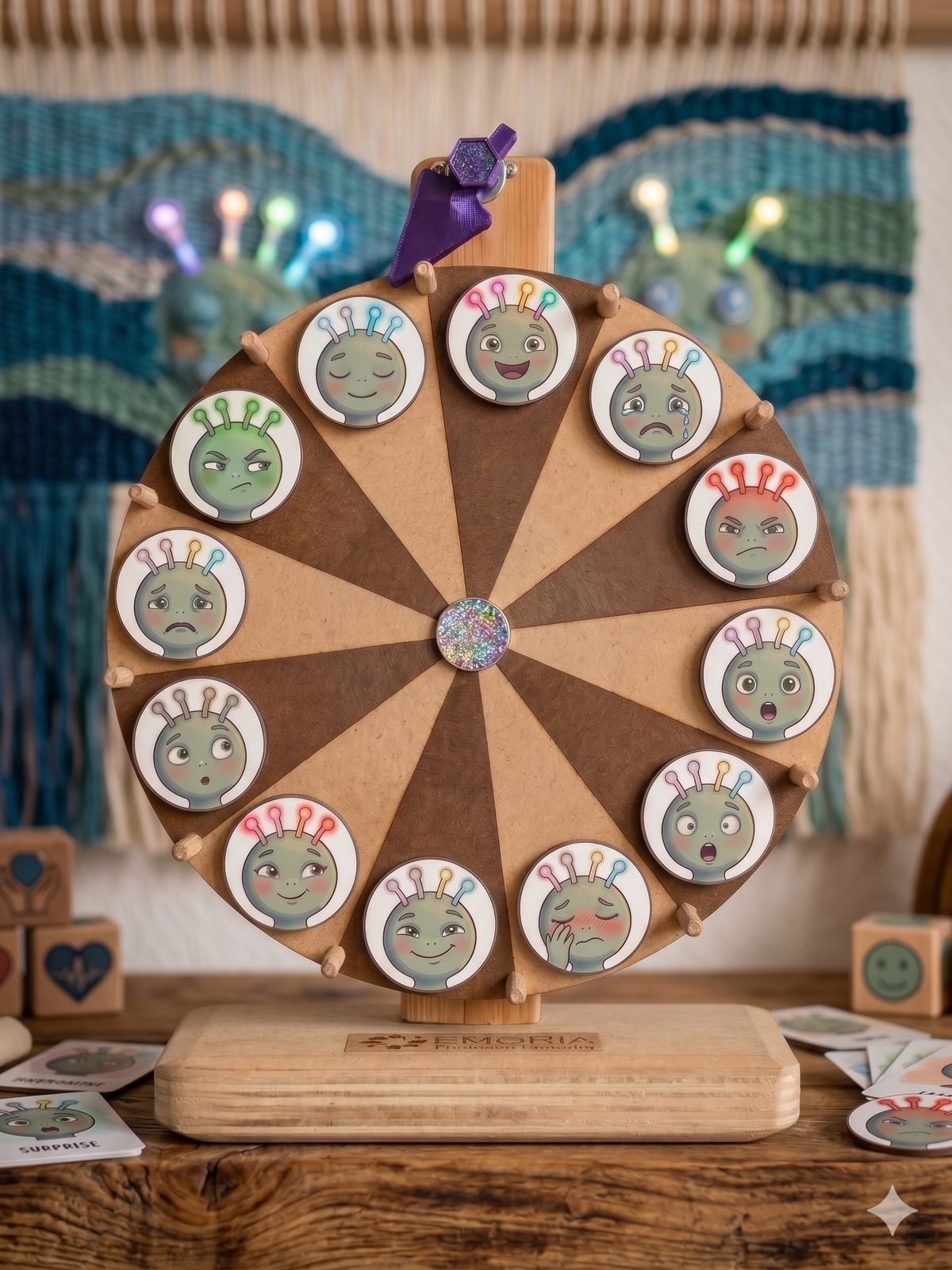
Children experience countless feelings every day: joy while playing, anger after an argument, pride in an achievement, or sadness when saying goodbye to their parents. But many children can't yet put into words what's going on inside them. Yubuu's Feeling Wheel helps educators guide children through these moments playfully, in a safe space, with no pressure to perform and no right or wrong answers.
Why Yubuu's Feeling Wheel?
How Yubuu's Feeling Wheel can be used
What makes Yubuu's Feeling Wheel special?
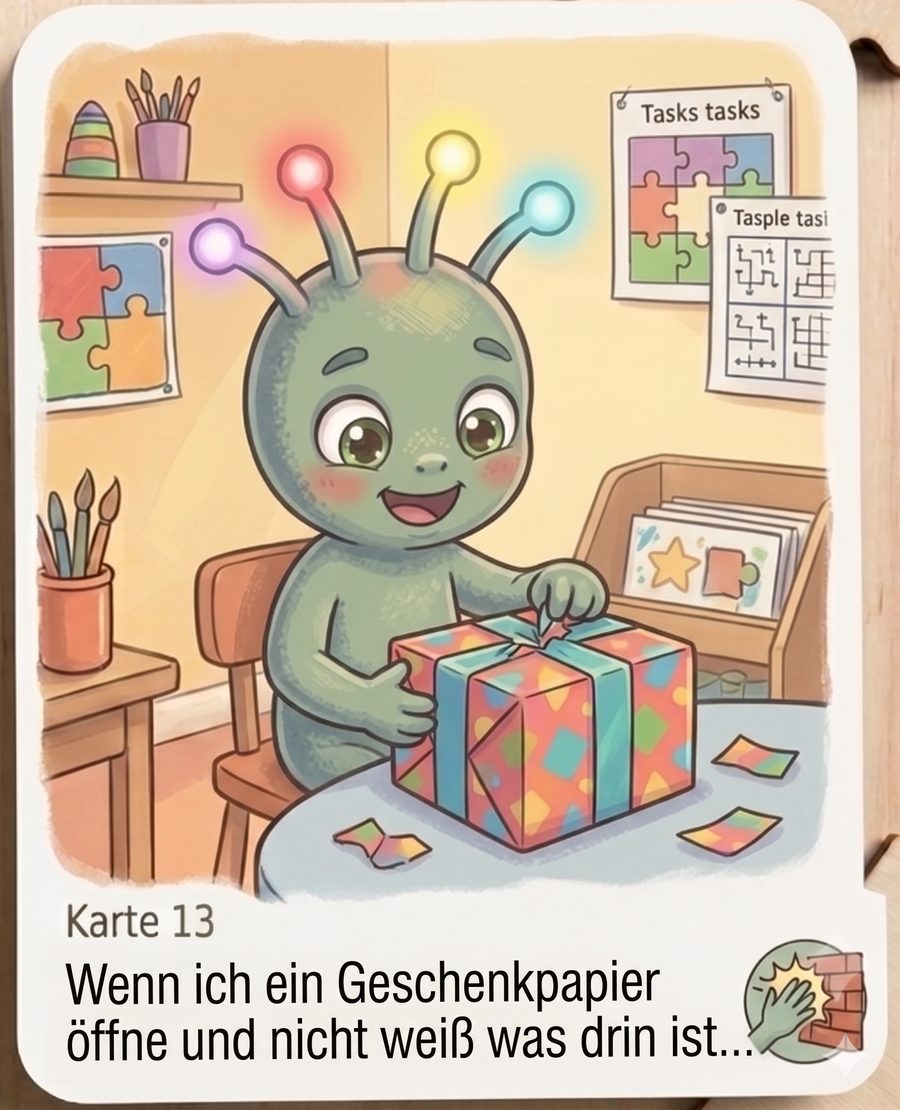
The focus isn't on finding the right answer, but on discovering together. Yubuu never judges an answer. Instead, Yubuu asks curious questions, listens closely, and invites children to get to know their own inner world of feelings. This creates an atmosphere where children feel taken seriously and can build trust. What makes it special: feelings never stay abstract. Spinning the wheel, matching the magnetic heads, the flash cards, the situation cards and the needs circles make feelings visible, tangible and understandable.
A window into children's inner world
For educators, Yubuu's Feeling Wheel is more than a game, it's also an observation tool. During play, it becomes visible which feelings currently occupy a child, how they interpret situations, and where there might be a need to talk. These observations help support each child more individually and sharpen your own educational work.
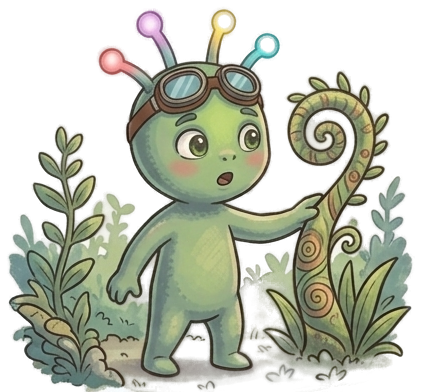
„Hello! I'm so glad you're here. Together we'll discover feelings, with no right or wrong. I listen, I ask questions, and I learn something new every day. Will you come along on our journey of discovery?"
— Yubuu
Who is the game for?
How long does a round take?
About 25 to 40 minutes, depending on group size and depth of conversation. Shorter variants using only individual components are also possible.
Do I need training to use the game?
No. The game is designed to be usable right away, with no extra training. An introduction is helpful, but not required.
What age is the game suitable for?
For children aged four to six, with its own flow for younger and older children within that range.
Can I use only parts of the game?
Yes. The Feeling Wheel and the flash cards work well on their own too, for example when only a little time is available.